Huemiliator · Colour & character
“That’s nice.”
Hugh
make your case ↓Huemiliator
Pick a colour. Hugh’s is better.
Huemiliator is a colour one-up game. You choose a colour. Hugh offers a shade from the same family, with an impeccably mannered explanation of why his is more satisfying.
Hugh gives that comparison its character: the gracious compliment, the exacting taste, the complete certainty that he is being helpful.
The two swatches stay beside his words. You can see the difference. Whether you accept his judgement is another matter.
The one-up
A popular choice.
Your choice
red
Hugh’s choice
Ash rose
“just more satisfying”
Colour-pair interaction study · a fixed example
The full character
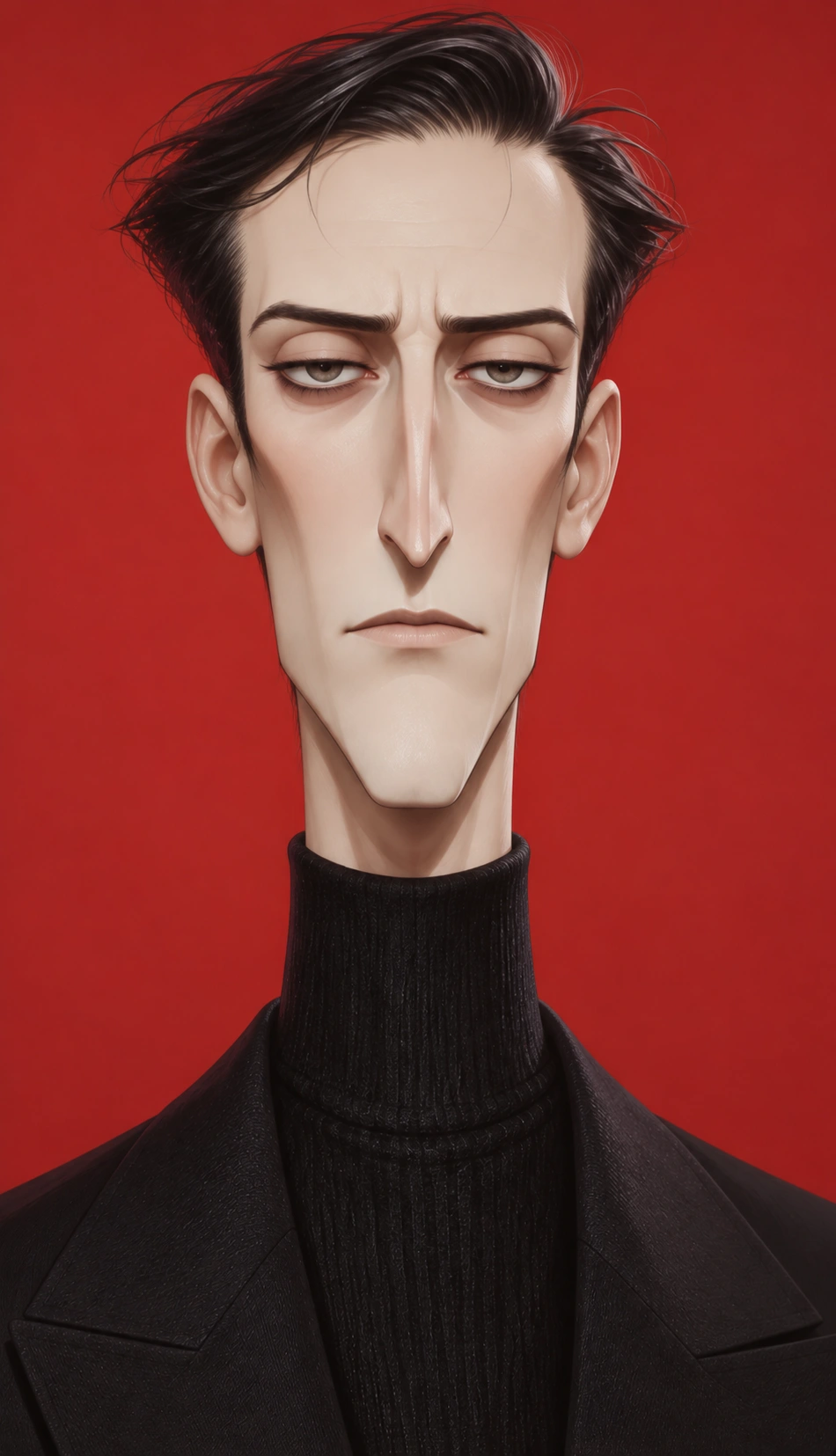
Nothing about him is approximate.
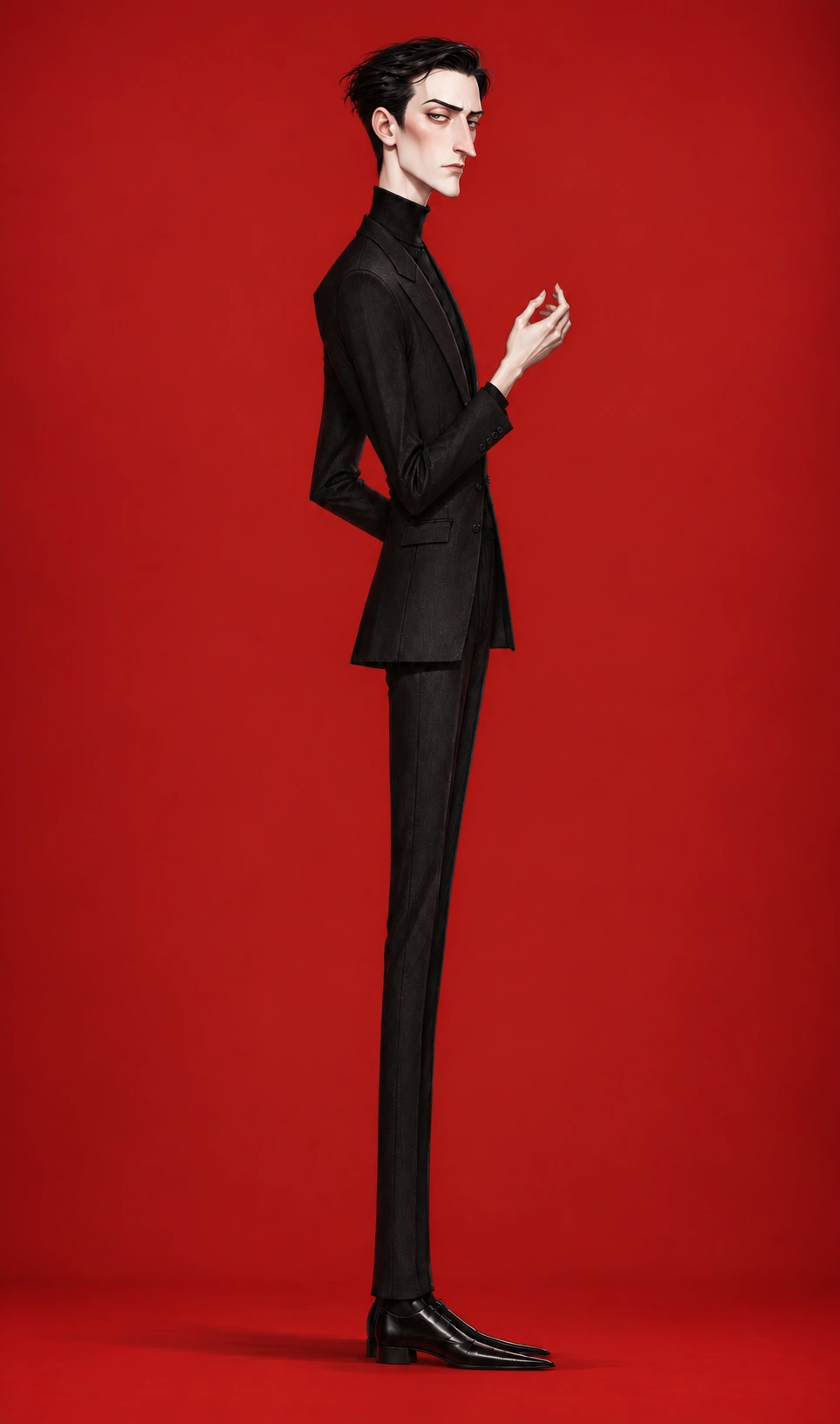
The poised hand, fitted suit and pointed shoes turn his exacting taste into a silhouette. He looks ready to correct a detail you hadn’t noticed.
Finding Hugh
The profile is already a verdict.
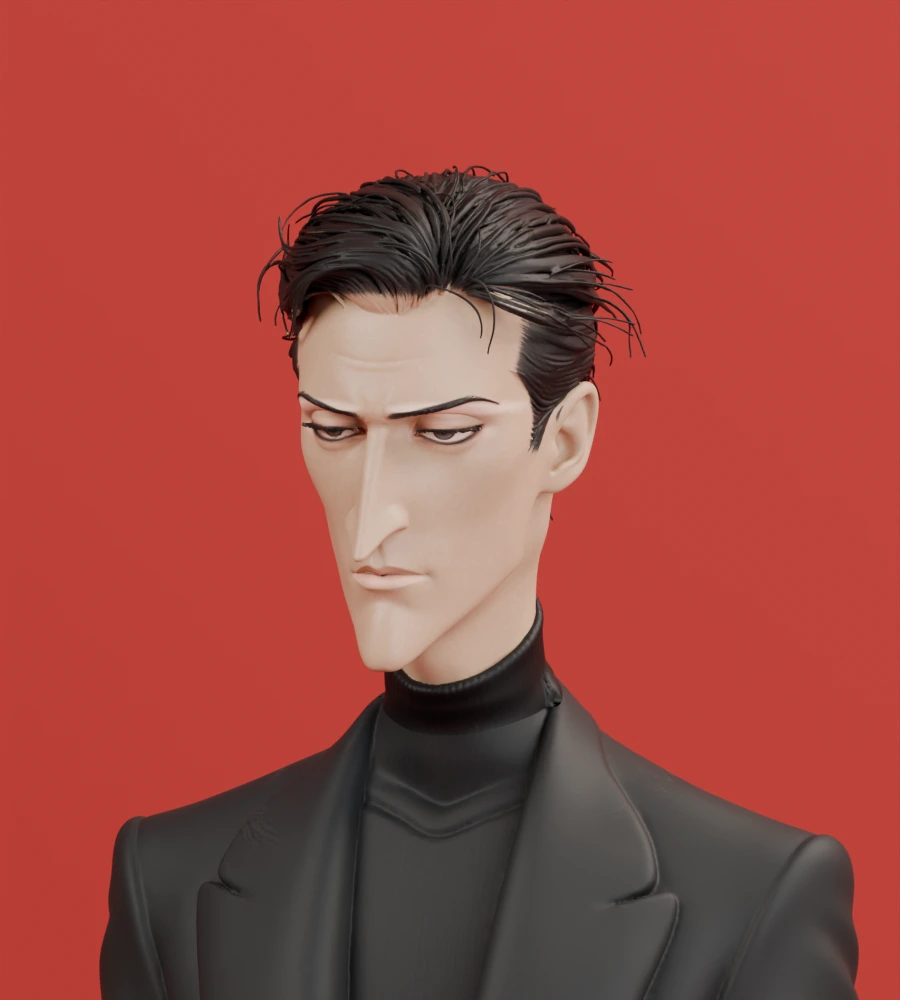
The long nose, pointed chin and heavy lids do most of the talking. The expression had to stay recognisable from every angle.
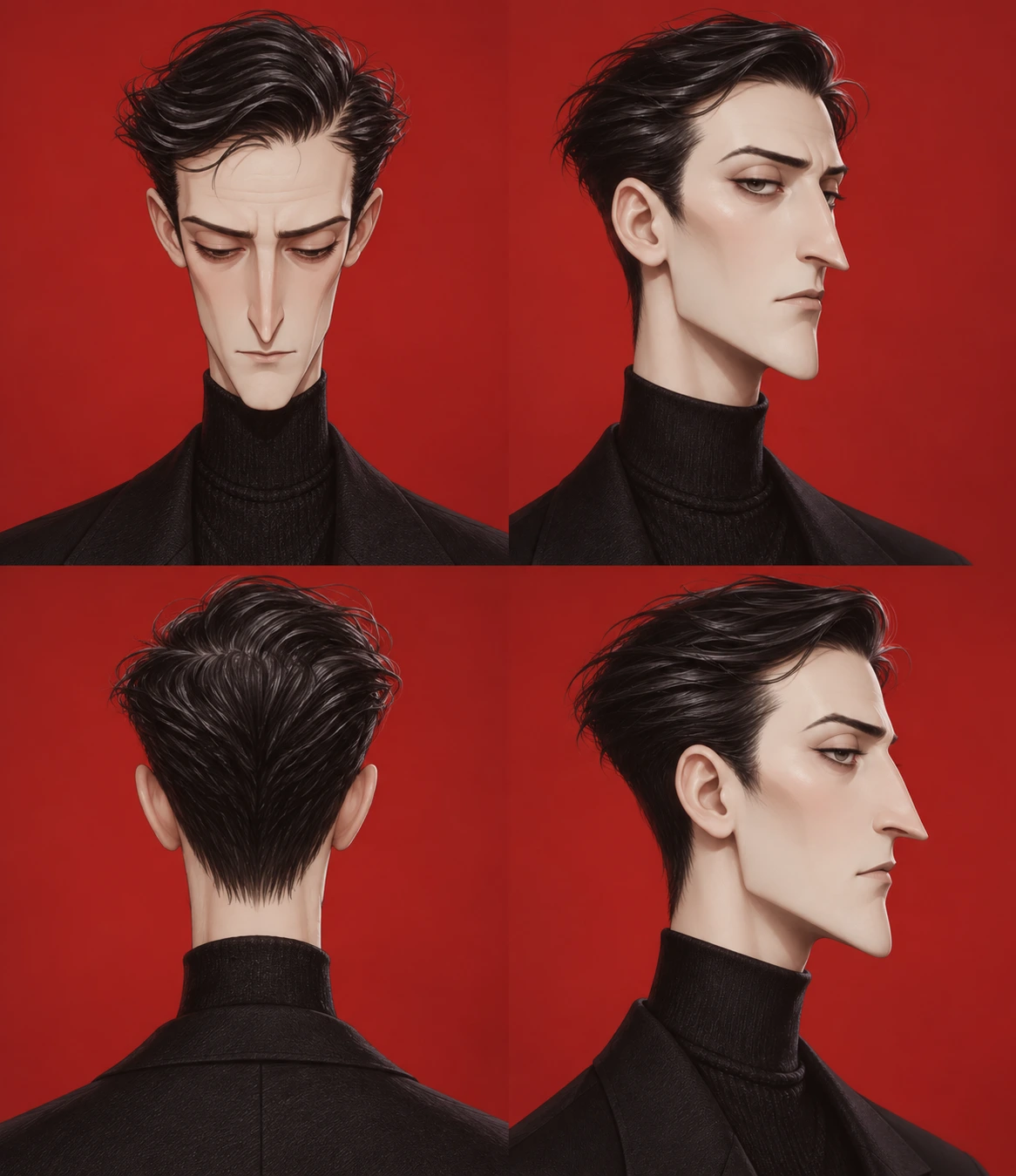
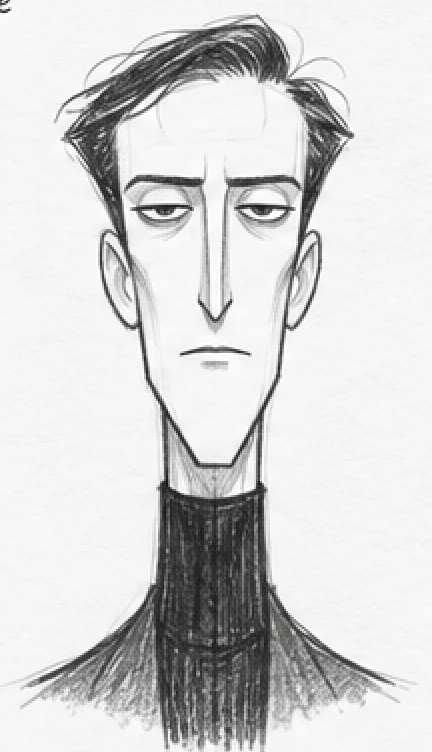
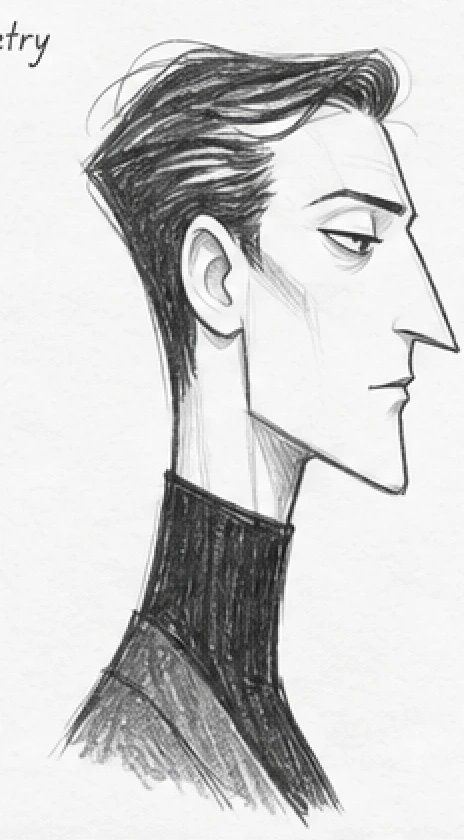
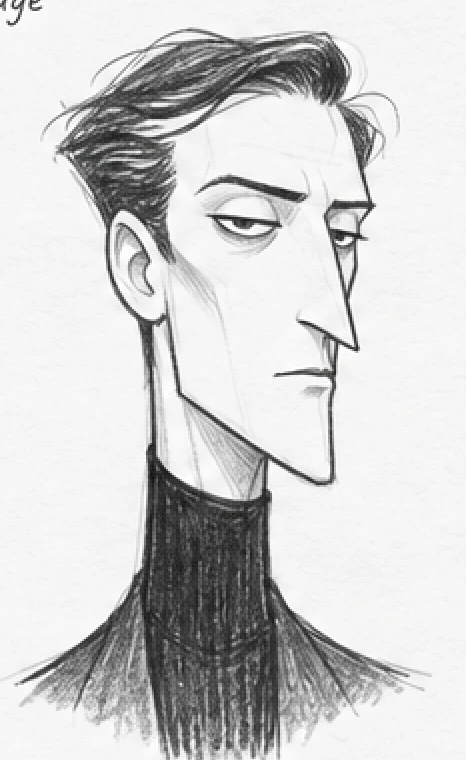
The small details
Very little encouragement.
Heavy lids. Impossibly long lashes. A mouth that has almost decided to be polite. His expression makes the compliment conditional before he says a word.
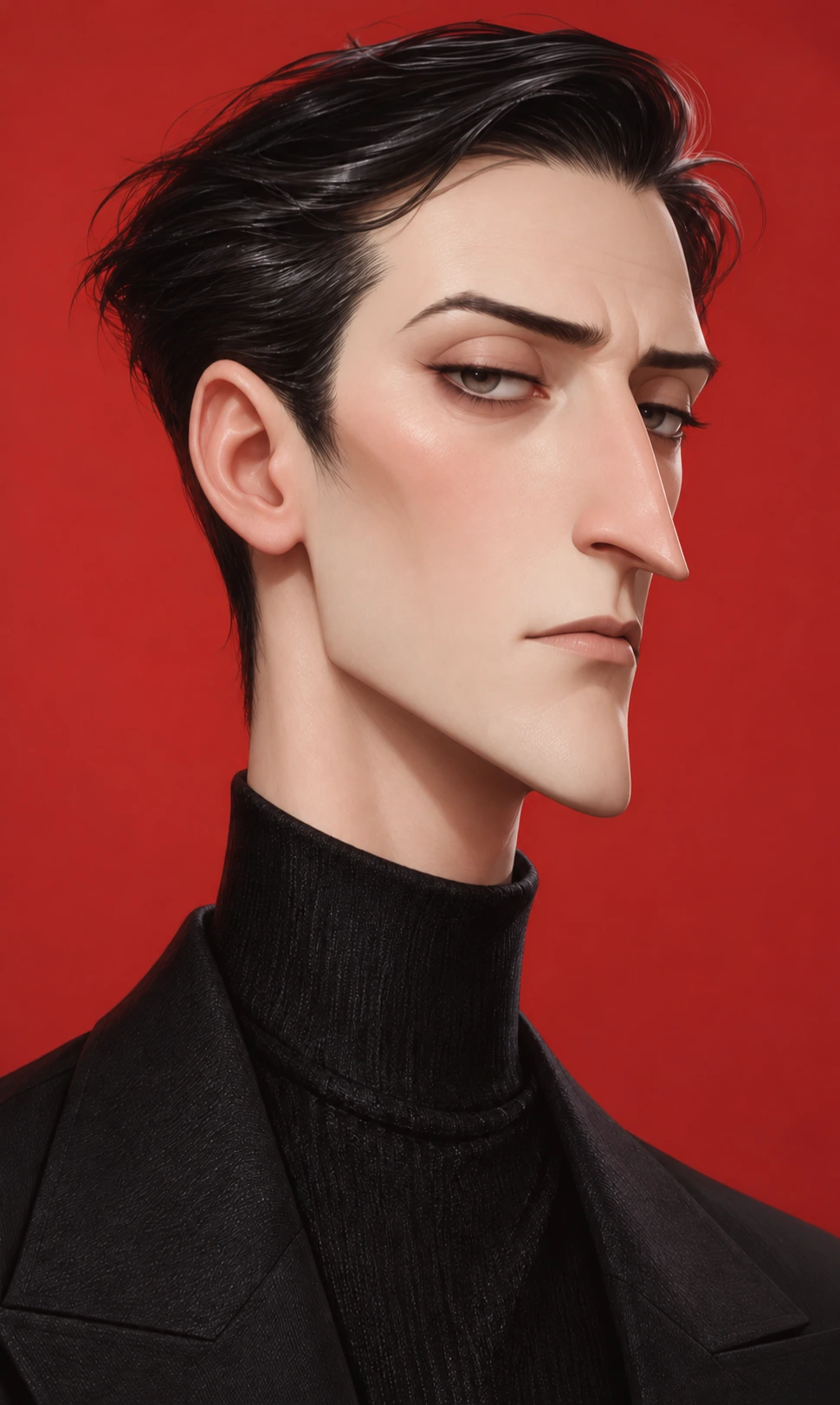
Into three dimensions
Finding the expression in the model.
An early Blender material study brought the skin, eyes and original sculpted hair together. It gave us a way to judge the expression in light and shade.
The whole character
He has somewhere better to be.
The head needed a body, and the body needed a way to move. The first walking rig let the posture, suit and proportions be judged together.
The question behind the character
His taste is certain. His words need room.
The colour engine supplies the facts: your colour, its family and a replacement in that family. Hugh composes the judgement around them.
The research asks whether he can stay coherent, give a meaningful reason and remain Hugh. Correct swatches alone do not settle that question.
Read the colour and character research ↗One particular face. Another whole project.
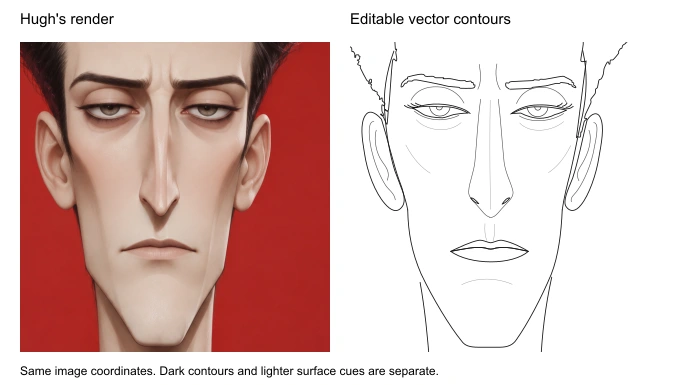
Trying to hold on to Hugh’s expression led to a vector map, then a repeatable Blender guide. That became spyder.
Character direction and review: Krystian Fernando. AI-assisted imagery, Blender assembly, materials and rigging. Portrait illustrations, model studies and motion proofs retain their own source stages.
Next project
spyder
A character problem becomes a tool.